
– Specialized Medical Lecture on Cardiac Intensive Care, ECG Interpretation, and Anticoagulant Use
Project Overview:
This initiative aimed to enhance the clinical knowledge and practical competencies of medical and nursing staff in the region by organizing a scientific day dedicated to advanced topics in cardiac intensive care, electrocardiography (ECG), and the therapeutic use of anticoagulants. The sessions were delivered by consultants and specialists affiliated with the Rojava Doctors’ Union, aligning with internationally recognized medical protocols.
Objectives:
- To build the capacity of healthcare workers in the diagnosis and management of cardiac conditions.
- To introduce global guidelines on the use of anticoagulants in cardiac care.
- To provide hands-on training in critical care procedures and equipment usage.
- To enhance clinical decision-making in cardiopulmonary emergencies.
Activity Report:
The event, held at the Reading Library in Qamishlo, featured a series of focused lectures covering:
- Electrocardiogram (ECG) interpretation techniques
- Standards of care in cardiac intensive care units (ICUs)
- Evidence-based protocols for anticoagulant therapy in cardiology
- Practical training sessions on CPR and mechanical ventilation, including indications and contraindications for ventilator use
The program provided participants from hospitals and healthcare centers with both theoretical updates and practical skills in line with international cardiac care standards.
Impact:
This scientific day contributed significantly to strengthening the capacity of healthcare providers in Northeast Syria, particularly in critical cardiac care. By promoting updated clinical protocols and facilitating skill development in emergency response, the Rojava Doctors’ Union reaffirmed its commitment to advancing medical education and ensuring quality healthcare services under challenging conditions.
– Separation Surgery of Conjoined Twins
Objective:
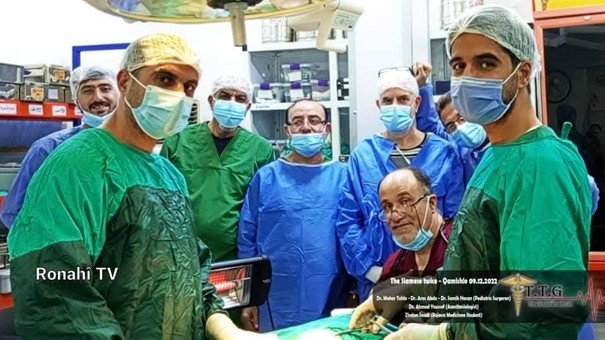
To perform a rare and highly specialized surgical procedure—separating conjoined twins—in one of the first operations of its kind in Syria and Rojava. The intervention involved pediatric surgeons, general surgeons, and consultants from Rojava University. The project reflects the commitment to advancing complex medical care in the region despite limited resources.
Activity Report:
The conjoined twins, Muheij and Shahen Al-Issa, were born fused at the abdomen, sharing portions of the liver and intestines. Based on initial medical evaluations, the surgical separation was originally scheduled for six months post-delivery to ensure optimal surgical conditions.
However, due to severe neurological complications in Muheij, including hydrocephalus and meningitis, the medical team was compelled to perform the separation urgently to save the life of the healthier twin, Shahen.
The emergency surgery was conducted at a hospital affiliated with the Autonomous Administration in Qamishlo. The procedure lasted two and a half hours and involved a multidisciplinary team of seven physicians from the Rojava Doctors’ Union, the Kurdish Red Crescent, and faculty members from the Faculty of Medicine at Rojava University.
Muheij, unfortunately, succumbed to his condition, but his sacrifice enabled his brother Shahen to survive. Shahen was transferred to the intensive care unit for continuous monitoring over the following week.
According to the attending physicians, the surgery was extremely complex and high-risk, but it was deemed successful under the circumstances. The team noted that both lives might have been saved had the neurological complications in Muheij been detected earlier.
The twins were born to a displaced family originally from the village of Kozliya in the countryside of Tal Tamr and were residing in Washokani IDP camp, which added a profound humanitarian dimension to this rare and emotionally charged medical case.
This intervention highlights the critical role played by local medical professionals in performing advanced procedures under resource-constrained conditions and underscores the importance of developing pediatric surgical capacity in conflict-affected areas.
– Emergency Medical Assistance for Internally Displaced Persons from Shahba and Afrin
Objective:
To respond to the urgent health and humanitarian needs resulting from the military offensive carried out by Turkish-backed factions of the Syrian National Army against civilians in the Shahba region. The assault triggered a large-scale displacement of more than 120,000 civilians—primarily former residents of Afrin who had previously fled the Turkish military operation in 2018.
Activity Report:
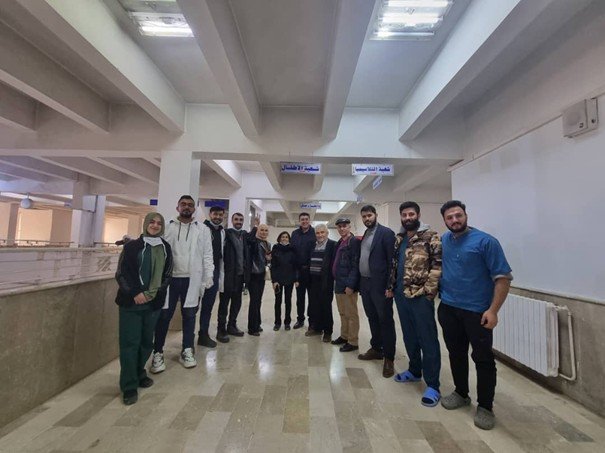
Amid the harsh conditions of war in Shahba and the rural outskirts of Aleppo, tens of thousands of civilians—mostly women, children, and the elderly—were forcibly displaced. In response to this humanitarian emergency, the Rojava Doctors’ Union launched a targeted medical intervention aimed at alleviating the suffering of the displaced population.
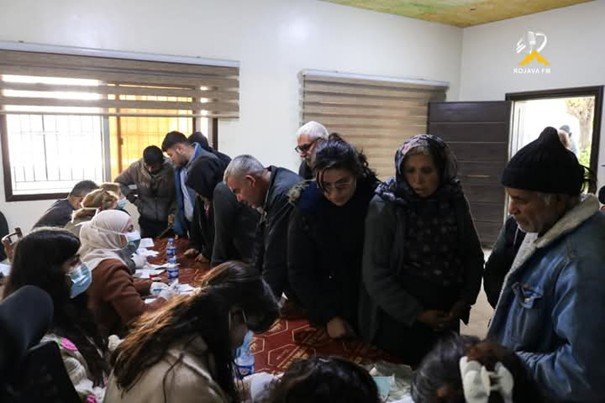
Several health points were established across Qamishlo, staffed by general practitioners and specialists, in coordination with the Pharmacists’ Union.
Support provided included:
- Provision of essential medications and medical supplies.
- Equipping medical points with diagnostic and monitoring tools.
- Offering free medical consultations and services to all internally displaced individuals.
Impact:
This project significantly eased the physical and psychological burden faced by thousands of displaced families who sought refuge in Northeastern Syria. By delivering timely and accessible medical care, the Rojava Doctors’ Union reaffirmed its commitment to humanitarian values and the right to health for all victims of conflict and forced displacement.
– DR-FRIEND
Project Objective:
To provide targeted health education for both the general public and healthcare professionals on the safe and effective use of medications during the month of Ramadan. The initiative considered the unique challenges posed by prolonged fasting hours and sought to improve medication adherence and patient safety through culturally sensitive outreach in Amuda and its surrounding areas, including through digital platforms.
Project Summary:
The DR-FRIEND project was implemented over the course of one month and focused on adapting medication practices to the fasting schedules observed during Ramadan. Recognizing the need for specific guidance during this period, the project aimed to prevent misuse of medication and potential complications arising from altered dosing times.
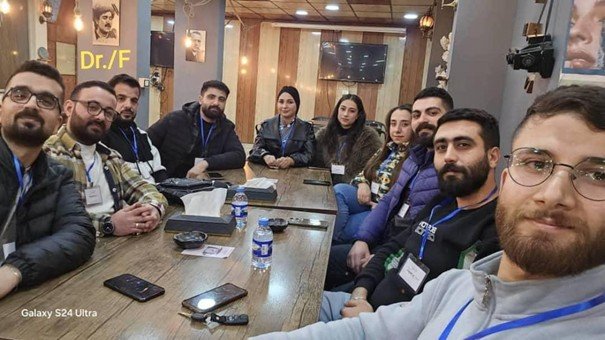
A series of daily educational sessions were conducted by a team of healthcare professionals, including general practitioners, pharmacists, and dentists. These sessions addressed key topics such as:
- Adjusting medication schedules for chronic and acute conditions
- Managing side effects related to timing changes
- Safe use of over-the-counter and prescription drugs during fasting hours
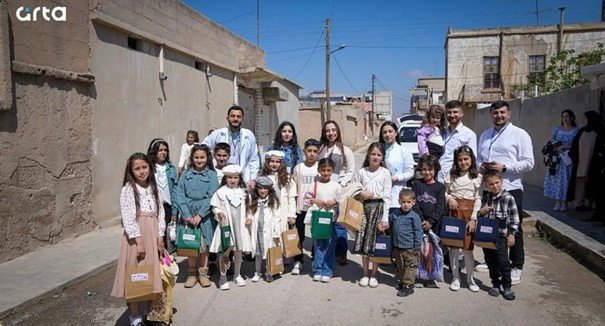
The project reached wide segments of the population in Amuda and nearby rural communities. A strategic partnership with Arta FM, a local radio station, allowed for the broadcasting of a dedicated daily health segment throughout the month. Additionally, a complementary awareness campaign was launched across social media platforms to extend outreach to digitally connected audiences.
This intervention is part of the Rojava Doctors’ Union’s broader commitment to community health education and the promotion of safe medical practices that respect local religious and social contexts. By aligning medical guidance with cultural practices, the Union continues to advocate for patient-centered care that upholds both health and dignity.